![[{[item.product.name]}]]([{[item.product.photo.url]}] 75w)
Shopping cart is empty
For free delivery are missing -,--
Free delivery!
Order Summary
Sum 0 €
Price includes discounts
FREE DELIVERY FROM PLN 300 IN POLAND
Sign up for the newsletter at the bottom of the page and receive a 5% discount on your first purchase.

The history of silk making
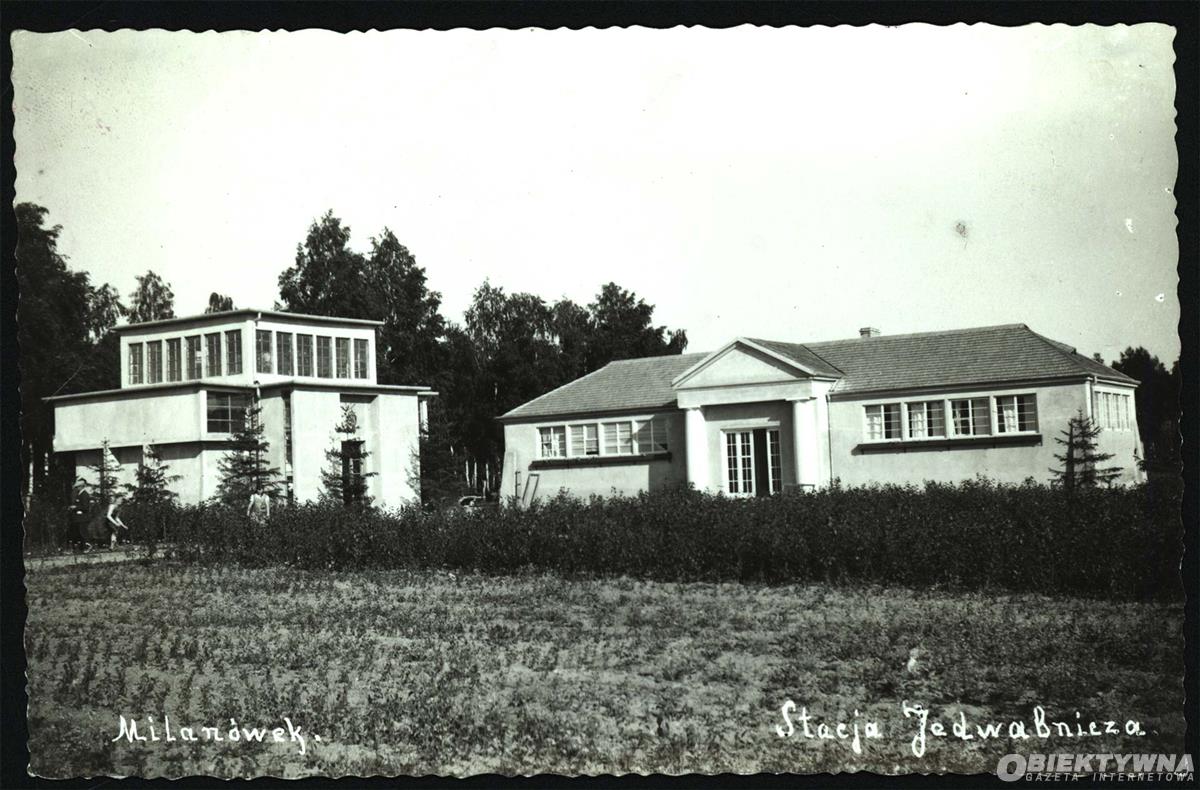
Milanówek - the capital of Polish silk
Milanówek was hailed as the capital of Polish silk almost 100 years ago. This was thanks to Henryk and Stanisława Witaczek, who founded the Central Experimental Silk Station in 1924. From then until the 1990s, various types of silk fabrics were produced in Milanówek. The company founded by Witaczek survived various twists and turns of history, ultimately ceasing production after privatization. Thus ended the chapter of silk weaving in Milanówek, but the tradition of painting on silk survived and is experiencing a renaissance.
Luma Milanówek, cultivating the Milanówek tradition, provides products – scarves, shawls, and wraps – hand-painted by experienced artists. The works are executed using various techniques on various types of silk fabrics – from satin, through crepe, to habotai. Painting each scarf or wrap is very time-consuming. The meticulous attention to detail in creating beautiful silk patterns makes each piece a small masterpiece. Created with exceptional craftsmanship, these exclusive silk haberdashery items are our company's flagship products.
How is silk made?
The caterpillars of one of thousands of butterfly species – the mulberry silkworm – feed on mulberry leaves, so the first step in silk production is cultivating the trees. After several days of consuming generous portions of mulberry leaves, the caterpillars begin to build a cocoon in which they pupate into a butterfly. During this time, a precious thread approximately 1.5 km long is created. The collected cocoons are then subjected to hot steam, which makes the tightly woven, thin thread easier to unwind. Then, the spinning process begins, resulting in silk yarn, the raw material for fabric production.
Where did silk come from?
"Shining with the colors of the rainbow, airy as mist, sensual as the essence of desire." Silk. The most luxurious natural fiber, used to produce magnificent fabrics such as satin, twill, crepe, georgette, and jacquard. Silk has been in fashion for several thousand years. For a long time, for approximately 2,000 years, the Chinese closely guarded the secret of obtaining silk threads and grew wealthy exporting the fabric west along the so-called Silk Road, a trade route connecting China with the Middle East and Europe, which owes its name to silk. Once the secret was no longer a secret, silk production began to spread throughout Asia, and then Europe. In Poland, it began to develop in earnest after regaining independence in 1918.
The history of Milano silk
The Witaczek siblings had a passion for silk in their genes. Henryk trained in mulberry and silkworm breeding while living in Georgia. There, he also began working at a silk factory managed by his father, where he worked at every stage of production, from developing silk ceremonies, through weaving, to dyeing fabrics and yarns. All this with the goal of delving deeper into the secrets of silkmaking and developing it in Poland.
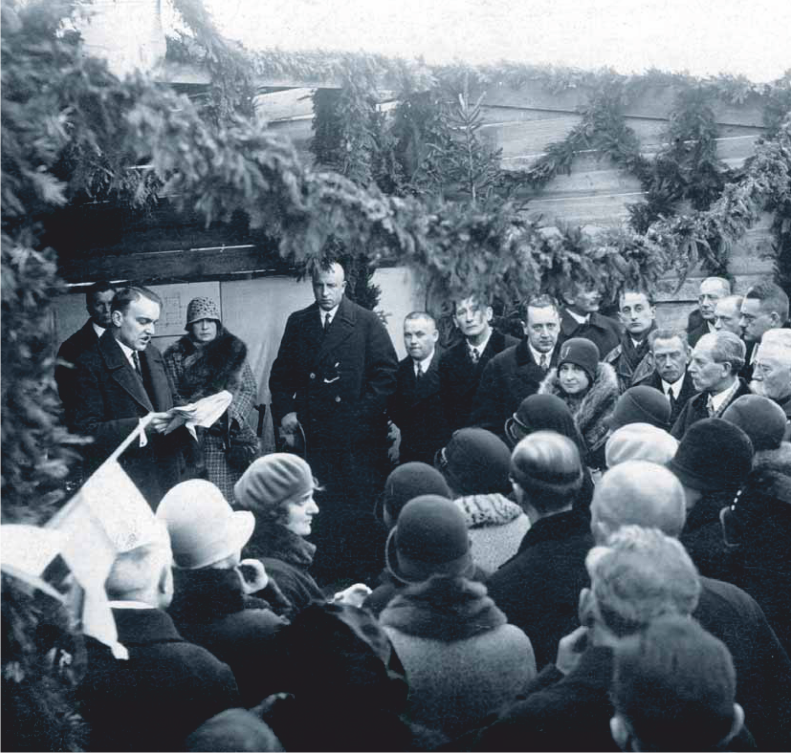
Laying the cornerstone for the construction of the Central Experimental Silk Station, pictured by Henryk Witaczek, among others
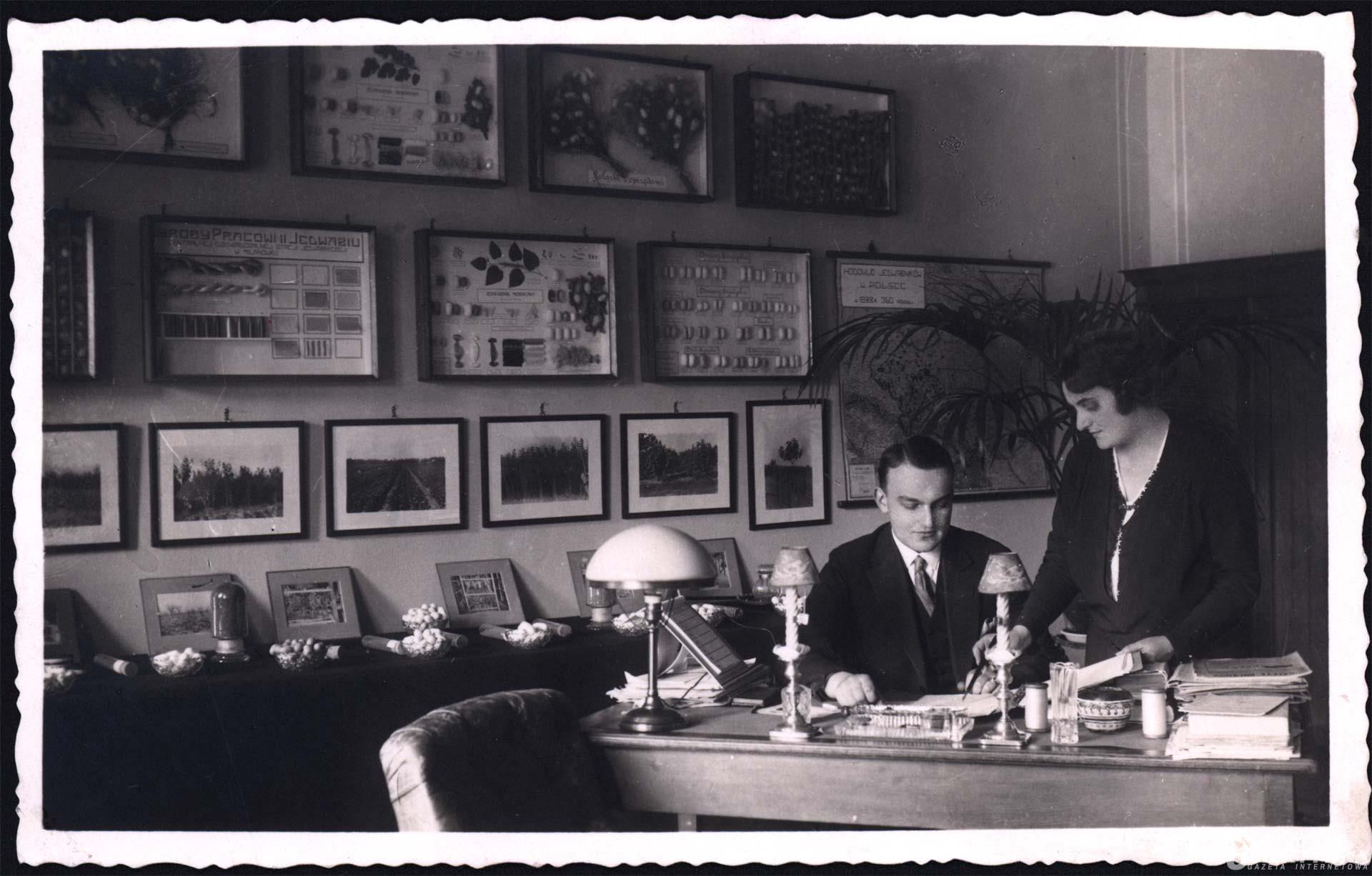
In 1924, Henryk Witaczek and his sister Stanisława, despite a lack of support from their community, founded the Central Experimental Silk Station in Milanówek, a research-based enterprise. Initially, they focused on teaching and promoting silkworm breeding and the planting and cultivation of mulberries.
When mulberry cultivation became popular in Poland, it became clear that someone needed to purchase and process the cocoons. The Central Experimental Silk Station, originally a research institution, began to address the next stage of silk processing. Henryk Witaczek designed the wooden equipment for processing the fibers.
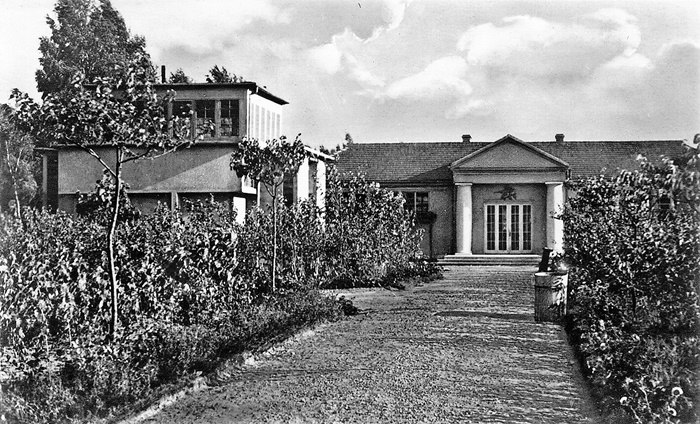
The building of the Central Experimental Silk Station in Milanówek, collection of M. Dygas and the Digital Archive of Local Tradition in Milanówek (CATL) of M. Koszut
Over time, the demand for silk began to grow in the market, which fostered the industrialization of the Witaczków factory and the expansion of its workforce, working on an increasingly wide range of products. They produced classic silk fabrics, taffeta, greige canvas, and crepe, and sold dress slips, scarves, and ties, as well as imaginative decorative, upholstery, and banner fabrics.
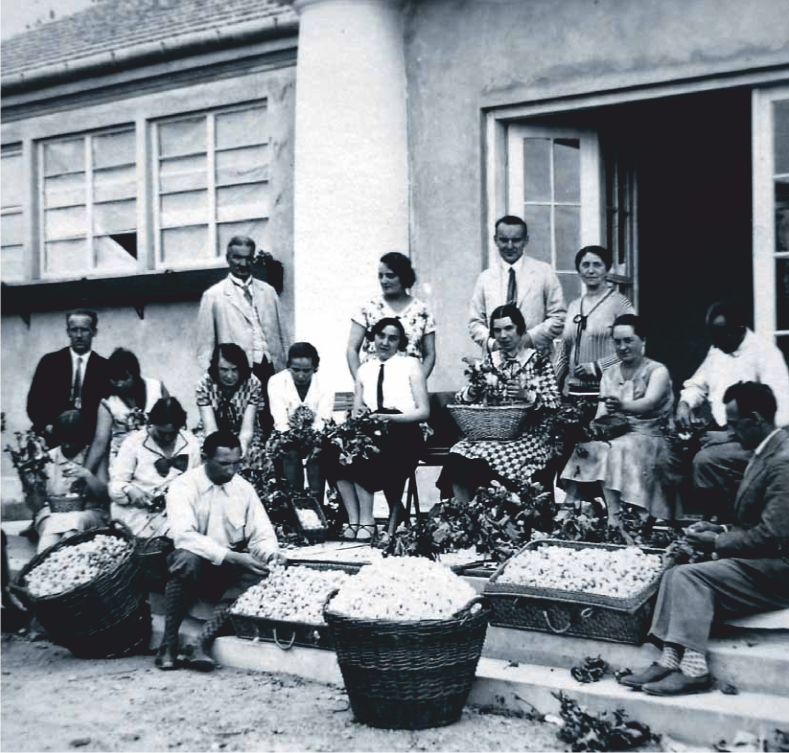
Working with cocoons - collections of M. Dygasi (CATL) M. Koszuta
In the 1930s, the company had its own chain of elegant "Milanówek" stores, and Milanówek silk enjoyed a high reputation. The company collaborated with the Academy of Fine Arts, which designed fabric patterns.
The company's dynamic growth was brutally interrupted by the outbreak of World War II. During the war, Henryk Witaczek continued to run the company, but the Germans sent a supervising commissioner, and production focused primarily on parachutes for the army.
The Witaczek family became deeply involved in social activities during this time. Thanks to the factory, many lives were saved from street roundups by offering real or fictitious employment. It was also during the occupation that the first hand-painted textiles began to be produced – all in an effort to provide employment for as many people as possible.
The Witaczek family welcomed refugees from the eastern borderlands and from Warsaw. The closed orphanage of Father Baudouin from Warsaw moved to Milanówek, and the equipment from the Infant Jesus Hospital was stored on the factory premises. Henryk Witaczek supported the activities of the Home Army, as well as the secret Secondary School operating in Milanówek.
Unfortunately, after the war, the Witaczko family was deprived of their life's possessions – the factory they founded and beautifully developed over the years. It is worth remembering their contributions to Polish silkmaking. They contributed significantly to the popularization of this craft – educating, employing, developing production technology, and also shaping fashion trends in the 1930s.
After the war, all company stores were closed, and the company itself was renamed the state-owned Natural Silk Factory "Milanówek." The factory continued the tradition of hand-painted and printed silk fabrics, gaining recognition in Poland and worldwide. The taffetas, satins, scarves, ties, and shawls produced here became synonymous with luxury in the grim reality of the Polish People's Republic.
The tradition of silkworm breeding, which made Milanówek unique in the country, began to decline in the 1980s, and the economic changes of the 1990s led to a complete halt in its production.
Fortunately, the tradition of painting on silk is still cultivated in Milanówek.
After the war, all company stores were closed, and the company itself was renamed the state-owned Natural Silk Factory "Milanówek." The factory continued the tradition of hand-painted and printed silk fabrics, gaining recognition in Poland and worldwide. The taffetas, satins, scarves, ties, and shawls produced here became synonymous with luxury in the grim reality of the Polish People's Republic.
The tradition of silkworm breeding, which made Milanówek unique in the country, began to decline in the 1980s, and the economic changes of the 1990s led to a complete halt in its production.
Fortunately, the tradition of painting on silk is still cultivated in Milanówek.
The uniqueness of silk
Natural silk is the only fiber from which a variety of fabrics can be created—from airy habotai to thick jacquard, and many others.
What makes silk fabric delicate and lustrous, yet strong and flexible? Silk is one of the thinnest natural fibers, and its structure is very unique. Fibroin, the basis of silk fiber, is a protein substance that exhibits extraordinary strength and elasticity. The triangular cross-section of the fibers causes light to be refracted as if through a prism.
This extraordinary fabric has applications not only in fashion but also in surgery and musical instruments, among other applications. It was once used in parachutes and also decorated the walls of royal palaces.